
GuideVolunteering & Partnerships
How Corporate Volunteering Works at TEEI
What employees do in TEEI Language, Skills Academy and TEEI Mentorship, how your company joins, and how you check participation in Evenhall.
The programme
On this page
Your employees bring what they know: an hour of conversation, advice from a career in their field, a class they know how to teach. TEEI runs the programmes and supports the people taking part. Your managers coordinate it all in Evenhall, a free workspace. There they see who took part and how much time we measured, kept apart from any claim about what that time achieved.
This guide is for CSR and ESG leads, HR directors, employee engagement leads and partnership managers. Use it to choose employee roles, organise participation and check the figures you report. It answers five questions in the order you are likely to ask them.
At a glance
- What can our employees do? Practise conversation with adult learners in TEEI Language. Teach a workshop, clinic or class in Skills Academy, including one on your own product. Or guide someone’s next career step in TEEI Mentorship.
- How do we start? You apply in three short sections. TEEI reviews the application before your Evenhall workspace opens. You invite colleagues with one link.
- How does it work? Each employee sets their own availability. Learners book conversation partners, mentees request or book mentors, and Skills Academy participants enrol in sessions. TEEI runs the room, the reminders and the support.
- How is it measured? From TEEI’s video room, never from the calendar. We count the time people were actually connected, and we measure activity. Outcomes need evidence of their own.
- What does it cost? Nothing. Company access, employee participation and Evenhall reporting are free. Your team gives time and expertise.
What can our employees do?
Your employees can contribute through TEEI Language, Skills Academy and TEEI Mentorship. Learners in TEEI Language are adults from Ukraine, and women from Latin America and the Caribbean. TEEI Mentorship works with people, especially Ukrainians, who are rebuilding a career or finding their way in a new job market. Participants can combine language practice, skills learning and career mentoring, starting with whichever fits their needs.
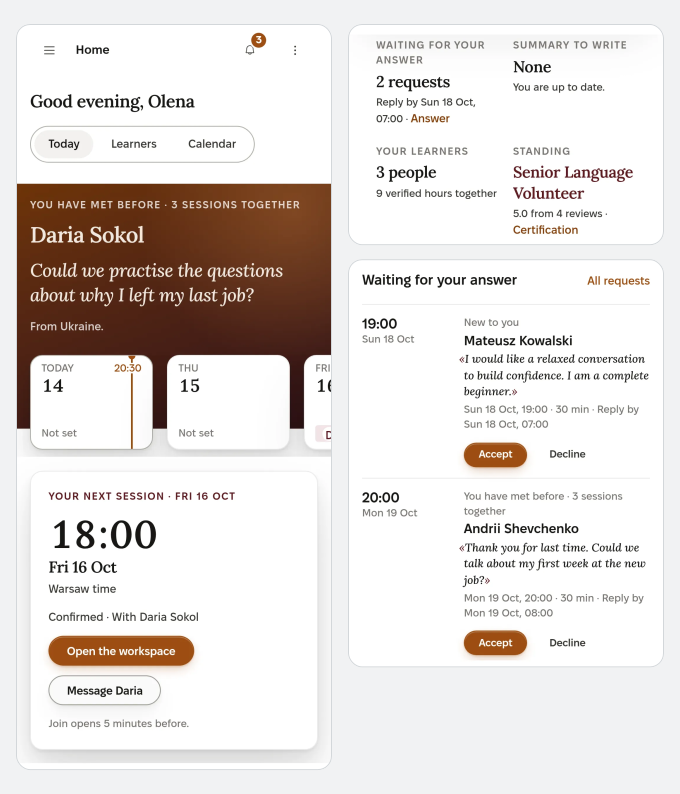
Conversation partner in TEEI Language. An employee meets one adult learner on video and talks. There is no lesson plan, no grading, no teaching qualification and no native-speaker requirement. Volunteers need to be comfortable in the language they offer. We offer twelve languages, including English, Spanish, Ukrainian, Polish and Norwegian. Learners choose the volunteer and the time. Employees who like groups can also host a small speaking club.
Instructor in Skills Academy. Skills Academy has two halves. Participants study at their own pace on DataCamp and take Google Career Certificates on Coursera. Alongside that, volunteers teach live: a workshop, a clinic, an expert Q&A, a webinar, or a class that meets weekly for two to six sessions. Teaching is open to any employee. They teach a skill they have, or show how they use it at work, in any field: HR, finance, law, marketing, leadership, product, data, software. TEEI brings the learners and does the scheduling. In a class, participants receive a certificate once the teaching team confirms the required attendance and reviewed work.
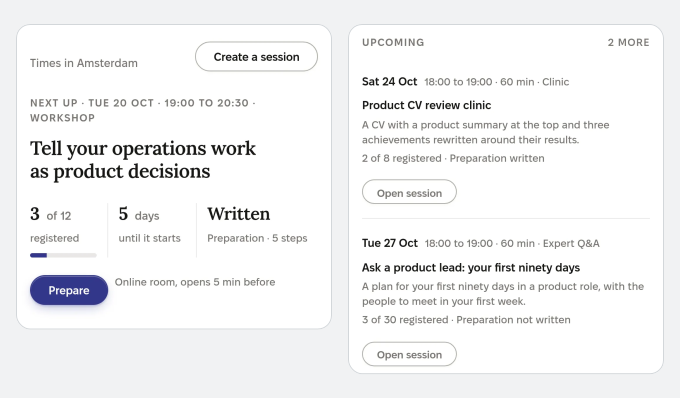
Your own technology as the lesson. A company that makes analytics software can have its engineers run a clinic on measuring a product: which events to track, how to read a funnel, how to answer a real question with data. Showing how a tool is really used, on real work, is teaching. The session page says whose technology it is. It teaches the skill, not the sale, and participants’ details never go to your company. You see counts, never names.
Career mentor in TEEI Mentorship. An employee with relevant professional experience helps a mentee with a CV, interview preparation, a job-search strategy, a career change or how hiring works in their industry. Mentees browse approved mentors by expertise and request or book a session, and the mentor accepts when acceptance is required. Mentors give career and professional guidance. They do not give therapy or legal advice, and they do not promise anyone a job.
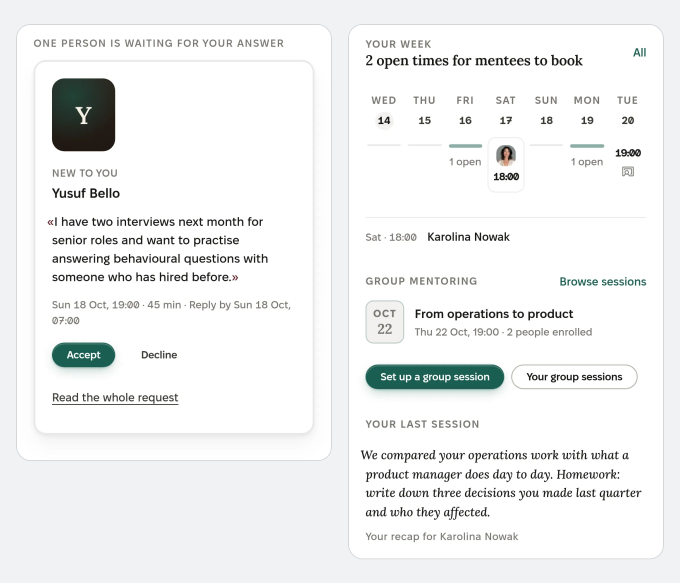
Three examples of a single session:
- An office manager in TEEI Language offers 30 minutes in English. She asks the learner to describe a working day, follows up with questions, and helps rephrase a sentence that did not land.
- A software engineer in Skills Academy runs a workshop on her company’s own product. She shows one practical task, then walks the group through doing it themselves.
- A recruiter in TEEI Mentorship reads a mentee’s CV and practises the three interview questions the mentee dreads most.
How do we start?
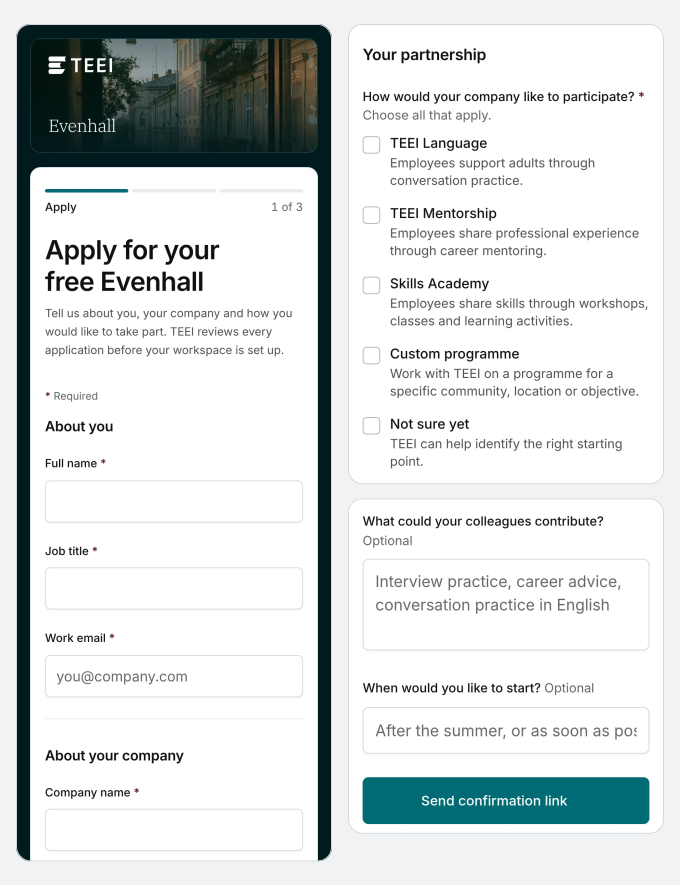
The person who applies for your company, for example your CSR, HR or sustainability lead, fills in three short sections and needs no documents: about you, about your company, and your partnership.
In the partnership section you tick the programmes you want to offer your colleagues: TEEI Language, TEEI Mentorship, Skills Academy, or a custom programme for a specific community, location or objective. If you are not sure yet, you tick Not sure yet, and TEEI can help you find the right starting point. You also say what you want the partnership to achieve and roughly how many colleagues might take part at first. Two optional questions ask what your colleagues could contribute and when you would like to start.
- You confirm your work email. One link sends your application to TEEI.
- TEEI reviews it. We approve the application, ask for more information, or decline. Your workspace opens after that review, never before it.
- You set up the workspace. You accept your company’s access and complete the setup steps and the data-processing agreement. Before you finish, your IT team can review single sign-on, access roles, audit history and data-processing documentation in the Trust center. The demo Trust center shows the same page.
- You invite colleagues. Share one invitation link, or invite people by email. You give managers roles such as CSR manager, programme manager, team lead or viewer.
- Each colleague joins. They register on the programme platform, which takes about two minutes, and set their availability. TEEI reviews every profile before anyone can book them. Your company does not run this check, and it cannot skip it.
TEEI runs both reviews in that list: one of your company, once, and one of each colleague before anyone can book them.

How does volunteering actually work?
A TEEI Language or TEEI Mentorship session lasts 30, 45 or 60 minutes, once or at the same time every week. There is no minimum: employees open the hours they can give and choose how many sessions they take. A manager can also ask TEEI for a Skills Academy class taught by a named colleague. We agree its format and scope with that instructor, and the class takes preparation as well as teaching.
Participants do the booking. In TEEI Language, learners choose a conversation partner and a time. In TEEI Mentorship, a mentee requests or books a session with a mentor. In Skills Academy, learners find a session by field and level and enrol, so an instructor never has to recruit an audience.
The session takes place in TEEI’s video room, in the browser. We send the booking notifications and reminders, manage participant access, onboarding and safeguarding, and support both sides.
In Evenhall, your managers follow upcoming activity across teams. If your company gives time for volunteering, they approve time requests against your company policy. In their own portal, employees check their next session, their hours so far and the programmes open to them. They can also view a certificate of contribution with their verified volunteering hours.
How do we measure participation and impact?
We count from the room, not the calendar.
When both people join a session, we record from TEEI’s video room when each of them connected and left. For a one-to-one session, the hours are the time both were connected to the same room at the same time, not the length of the booking. A session counts when the booking and the attendance are completed and the shared time is at least five minutes. A session whose evidence has not arrived is marked as awaiting evidence and kept apart. It is not counted as hours, and it is not treated as a no-show. For a Skills Academy instructor, we credit their own measured time in the room, up to the scheduled length where we have it. Where nothing was measured, nobody gets hours. Preparation and follow-up are not counted. Our session methodology explains how we count one-to-one sessions and hours.
“Verified” here means verified by TEEI, from our own room records. It does not mean audited by anyone else.
Once a session is counted, it appears in Evenhall linked to the record behind it. Your CSR manager sees each named employee’s hours and session records. Employees never see each other’s records. Your employee meets the participant in the session, but we keep participants’ names out of your company’s reporting. Personal learning conversations and mentoring notes stay private.
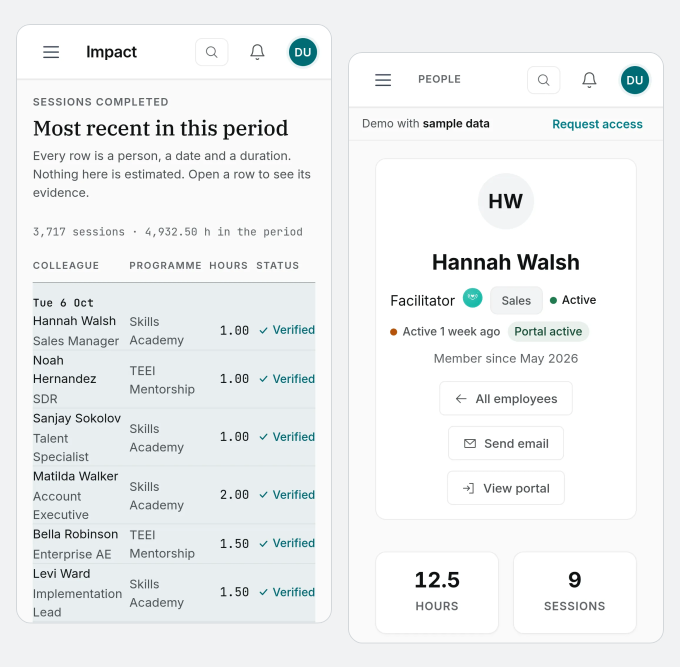
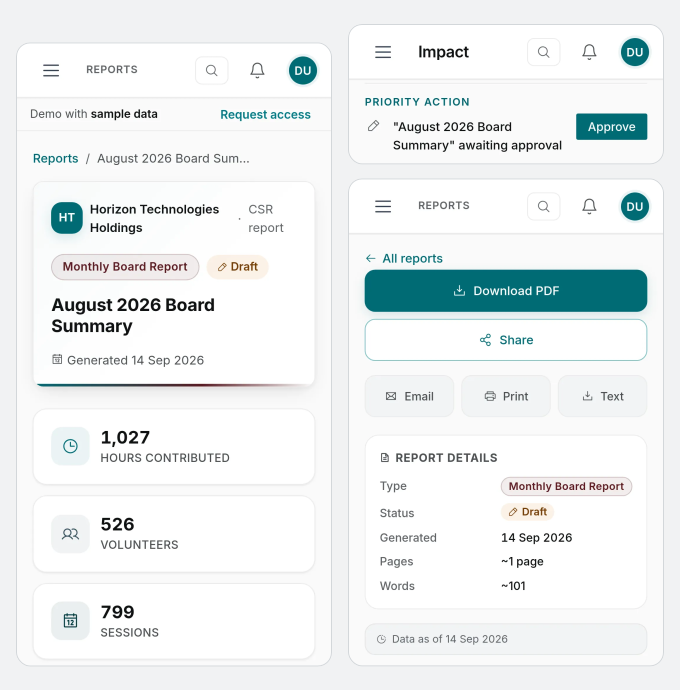
Your CSR manager builds the report in Evenhall, starting from an AI-drafted version of the programme records with every figure linked to its source. You review it, approve it, and share it as a PDF or through a link you can revoke. Exports come as templates for common reporting frameworks, so the figures can support social, workforce and sustainability reporting. TEEI does not audit your disclosure.
What the numbers show, and what they do not. The records show activity: who took part, in which programme, how many sessions, how many measured hours, and how many records still await evidence. They do not show outcomes: whether a learner now speaks with more confidence, understood the lesson or found work. A session record cannot prove those things, and we do not let a report imply them. Some results are records in their own right, such as a class certificate issued after confirmed attendance and reviewed work. The report can name those, as records, with their source.

Our public counter covers one-to-one sessions in TEEI Language and TEEI Mentorship. We combine completed bookings from the platform we used before with sessions on the platform we run now, where the rules above apply. On both, the hours are the time both people were in the room together. We report group sessions separately. We never break the counter down by company; your own figures live in your workspace.
| Measure | Reading | Note |
|---|---|---|
| One-to-one sessions | ||
| Completed sessions | 12,537 | |
| Hours of measured conversation | 9,447.4 | Time both people were in the room together |
| Completed bookings awaiting evidence | 7 | Shown, not counted |
| Group sessions | ||
| Ended sessions | 58 | Group sessions on the platform we run; a session can end with no recorded attendance |
| Observed participant-hours | 173.9 | Each person’s measured time in the room, summed |
| Recorded attendances | 188 | One person can count in more than one session |

What does it cost, and what does TEEI handle?
Nothing. Company access, employee participation and Evenhall reporting are free. Your team gives time and expertise.
We work this way because TEEI is a nonprofit, and we would rather have your people in the programmes than in a procurement cycle.
| TEEI handles | Your company handles |
|---|---|
| Running the programmes, and recruiting and supporting the participants | Choosing which programmes to introduce |
| Reviewing every employee’s profile before anyone can book them | Deciding whom to invite |
| The video room, booking notifications and reminders | Giving employees room in the week to take part |
| Participant access, onboarding and safeguarding | Nothing here: participants’ names stay with TEEI |
| Measuring session time and counting the hours | Reviewing and approving the report |
More than volunteering
Some companies have more to offer than their people’s time, and one partnership can combine several contributions:
- Teach your own technology. A product session in Skills Academy, as above. Sessions credited to your company appear in its Evenhall workspace.
- Bring what you already run. A course or programme, learning material, your own instructors, or a group of your own learners. Start with one session.
- Build with TEEI. Integrate your technology into TEEI’s learning and mentoring services, or build a service together. See technology partnerships.
- Shape a programme. Develop a custom programme with TEEI. We review it before it starts, and we deliver it.
The whole journey
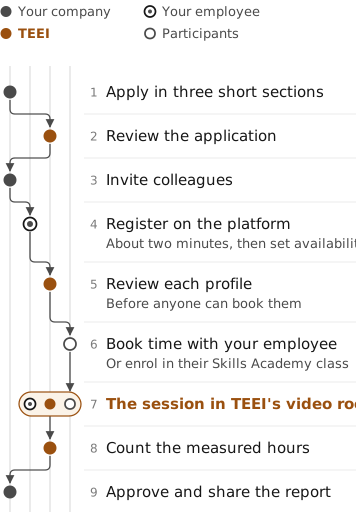
Your company applies. TEEI reviews the application, and your Evenhall workspace opens. You invite colleagues. Each colleague registers on the programme platform, which takes about two minutes, and sets the hours they can give. TEEI reviews each profile before anyone can book them. Then participants book time with your colleague: learners choose a conversation partner, mentees request or book a mentor, and Skills Academy participants enrol in a colleague’s class. Each session runs in TEEI’s video room. We calculate the hours from the attendance evidence, and your CSR manager reviews the records and prepares the report in Evenhall.
Next steps
- See it first. Explore the Evenhall demo, a workspace filled with sample data: who volunteered, in which programme, and the hours recorded.
- Apply. Apply for your free Evenhall workspace. TEEI reviews every application before a workspace is set up.
- Talk it through. Book a 30-minute call about which programmes fit your people.
Frequently asked questions
Do our employees need teaching experience?
No. TEEI Language has no teaching qualification and no native-speaker requirement. Skills Academy is open: an employee teaches a skill they have, or shows how they use it at work. Mentors draw on their own professional experience.
How much time does an employee have to commit?
There is no minimum. Each employee sets their own availability and chooses how many sessions they take.
Can our managers see what happens in a session?
No. Your CSR manager sees each named employee's hours and session records. Your employee meets the participant in the session, but we keep participants' names out of your company's reporting, and personal learning conversations and mentoring notes stay private.
Can we use the figures in our sustainability report?
Yes, as activity data with its sources. Exports come as templates for common reporting frameworks. TEEI does not audit your disclosure, and the records do not prove learning or employment outcomes.
Can our employees teach our own product?
Yes, as one option in Skills Academy. The session page says whose technology it is, it teaches the skill rather than the sale, and participants' details never go to your company.