
GuideCSR Reporting
How to Write the Community Section of a CSR Report
A section-by-section guide to the community part of a CSR report: what each figure can claim, which framework term fits, and what to leave out.
The programme
On this page
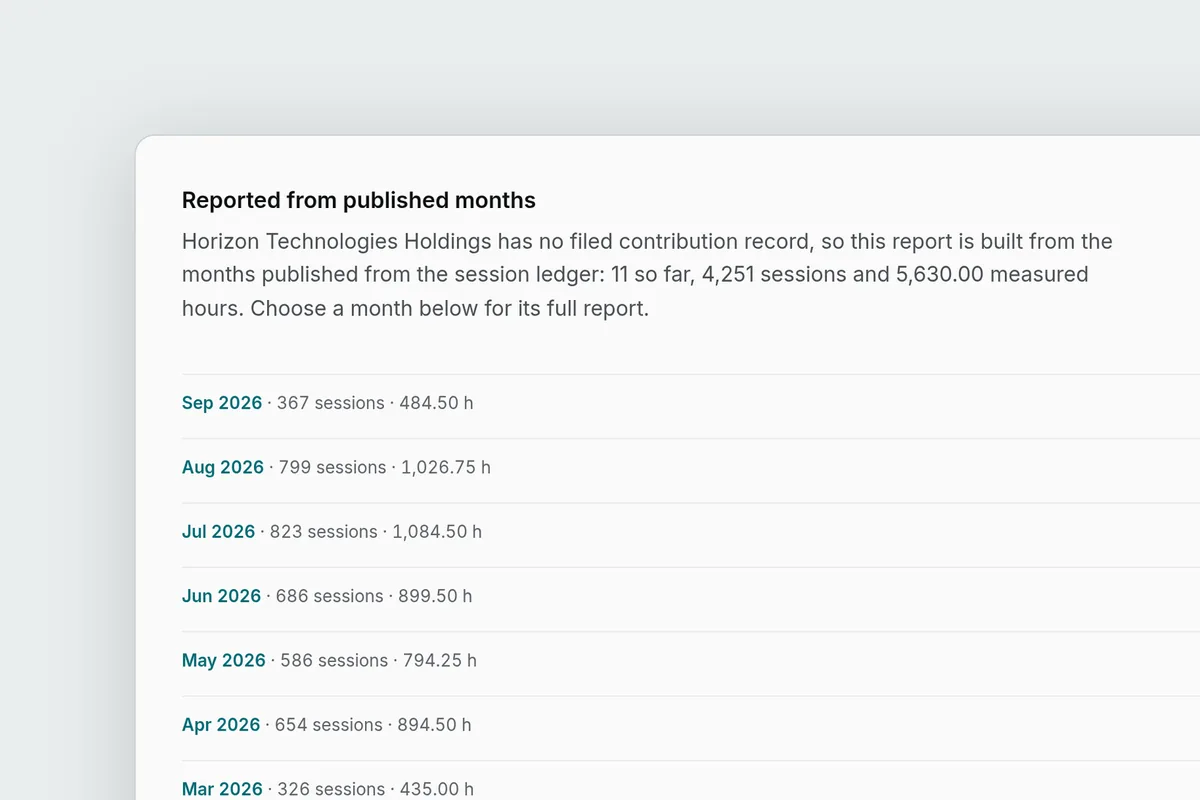
An emissions section usually states its methodology, its boundary and who checked it. A community section can do the same. A useful one explains what your company contributed, which activities took place and what changed for participants, and it says how each claim was checked, so the reader can tell a measurement from a hope.
This guide goes through the section in the order a reader meets it. For each part it says what the part is for, which kind of claim it can carry, and where the framework vocabulary fits. Every part ends with a pointer to the matching fields in our Community Investment Report Kit. The kit is a free template with a field dictionary and an example filled in from public data.
We run volunteering programmes that companies take part in, so we have a view. We have tried to keep it to what a careful reader of any community section would ask, whoever the partner is.
Before you write: sort every claim by what it can bear
Most weak community sections have a single problem. They present five different kinds of statement in the same voice. Sort each sentence into one of five levels before you draft anything.
| Level | What it is | Example | How to phrase it |
|---|---|---|---|
| Direct measure | A figure recorded by a system, with a published rule for what counts | Verified volunteer hours, measured as the time the volunteer and the participant were in the same session | ”X verified hours, measured as…” with a link to the method |
| Supporting evidence | Counts that show activity took place, without saying what it achieved | Sessions held, people reached, countries | ”supports our output reporting” |
| Partial mapping | Evidence that can inform an outcome indicator, but only for the people it covers | Certificates, assessment readings | ”Of N participants with a reading, M…” with the denominator and coverage stated |
| Company data | Figures only your company holds | The cost of employees’ working time, effects on your own staff, business benefit | Your company owns and states these; a partner cannot |
| Not allowed | Statements no programme record can support on its own | Compliance with a standard, assurance, a causal effect, claims that an export meets a reporting standard | Leave them out unless a separate, named verification supports them |
Two rules sit on top of the table. First, report a partner’s contribution as its own scope: the hours, sessions and people reached in that partner’s activities, never a share of a participant’s wider progress. Second, your employees’ volunteer hours are an input. They are never a participant outcome, and a participant’s course activity is never your employees’ training.
In the kit: every field carries a “claim level” so the level travels with the number.
Part 1: Scope and approach
Open with what the section covers, before any number appears. A reader needs four facts:
- Which activities are in scope. Name the programmes and partners, and say what is excluded (for example, matched giving reported elsewhere).
- The period. State dates, not “this year”. If partners report on different periods, say so.
- The frameworks you used, with versions. The most direct framework for community investment is Business for Societal Impact (B4SI). Its public Sample Guidance Manual (2025) sets out the approach. The full guidance notes are for members, so say which one you worked from.1 If you report under GRI, the relevant topic standard is GRI 413: Local Communities 2016. Its Disclosure 413-1 covers “operations with local community engagement, impact assessments, and development programs”.2
- Who verified what. “Hours verified by our programme partner from session records” is a useful sentence. “Independently assured” is a different claim and needs an assurance provider’s name.
On the European standards: EFRAG’s announcement of 3 July 2026 reported the Commission’s delegated act on revised European Sustainability Reporting Standards (ESRS) and its transmission to the European Parliament and the Council for scrutiny.3 If your report refers to ESRS, check the adopted text and your own legal advice. This guide does not map community data to ESRS disclosures.
In the kit: the Scope and approach section has fields for programmes, period, frameworks and versions, and the verification statement.
Part 2: Inputs, what your company contributed
B4SI starts with inputs: the resources a company commits. It sorts them by form (cash, time, in-kind, management costs), by motivation, by issue and by location.1 For employee volunteering, the relevant input is time.
Here the framework is precise, and most reports are not. In B4SI, a time contribution is “the cost to the company of the paid working hours contributed by employees”.1 That has three consequences for your text:
- Hours and cost are two fields. A partner can give you verified hours. Only your company can turn them into a cost, because only you know salaries, grades and overheads.
- Paid time and own time are separate. Hours given in employees’ own time are recorded separately in B4SI, not added to the paid-time cost.
- Preparation and coordination are separate from delivery. If employees spent time on onboarding and preparation, and a coordinator spent time organising, record them as their own lines. Do not fold them into delivery hours.
The phrasing that holds up: “Employees contributed [X] verified volunteering hours in paid working time between [start date] and [end date]. At our average employee cost, this represents a time contribution of [amount].” The partner provides the attendance record. Your company confirms which hours fell within paid working time and calculates their cost.
In the kit: Inputs has separate fields for verified delivery hours, preparation and coordination hours, own-time hours and the company’s cost valuation.
Part 3: Outputs, what happened
Outputs are “what happens” as a result of the inputs: people reached, organisations supported, activities delivered.1 B4SI is explicit that outputs are not an assessment of effectiveness, quality or value. They are counts. Say so in the text, and your reader will trust the rest of the section more.
Three disciplines make an output figure usable:
- Count people directly reached. B4SI counts the people who took part, not everyone who might indirectly benefit.1 A conversation programme reached the learners who joined a session, not the population of their city.
- Keep units apart. A one-to-one session, a volunteer hour, a participant hour in a group session and an attendance are four different units. Take an illustrative 45-minute group class with two employee instructors and ten learners, all present throughout: that is one session, 1.5 employee hours and 7.5 learner attendance hours. Adding them produces a number that means nothing.
- Say whether a count is of people or of attendances. One person attending three group sessions is three attendances and one person.
Employees involved is also an output in B4SI, recorded as a business output.1 Report it as a unique count: an employee who took part in two programmes is one person.
In the kit: Outputs has fields for sessions, people reached (with the counting unit), countries and employees involved.
Part 4: Impact on the people you reached
This is where community sections overreach. B4SI describes depth of impact on a three-point scale:1
- Connect: people reached who can report some limited change as a result of the activity.
- Improve: people who can report a substantive improvement in their lives as a result of it.
- Transform: people who can report an enduring change in their circumstances, or for whom a change can be observed.
All three are counts of people who report or show change. None of them is the number of people reached. If you have no evidence of change, you have outputs, and you should stop there. That is a respectable position.
If you do have evidence, attach three things to every figure:
- The denominator. “Of [N] learners who answered a follow-up question, [M] said…” is a finding. “[M] learners improved” is not.
- The coverage. How many people could have answered, and how many did.
- The method. A self-reported answer, a test, an observed result. Each supports a different sentence.
Certificates and assessment readings belong in the partial-mapping level. A certificate records that someone met its stated requirements. Report it as a completion record. To describe improvement, add evidence of changed skills or circumstances, with the method, the denominator and the coverage. A certificate does not show what someone can now do at work.
A job, a qualification or a new role may support a “transform” claim when evidence shows a lasting change linked to the activity. A participant’s own account of progress is valuable. Describe it as self-reported, say whom it covers, and do not present it as a result measured across everyone.
In the kit: Impact on people has one row per indicator, each with a depth level, method, denominator and coverage. The example leaves the row empty on purpose, and explains why.
Part 5: Impact on your employees and your business
B4SI also looks at impacts on employee participants and on the business, such as changes in skills, attitudes or behaviour.1 These are company data. Your partner can tell you who took part and for how long. It cannot tell you what your employees learned, unless you asked them.
If you survey employees, report the question, the number of respondents and the date. Keep this separate from the participants’ outcomes. An employee’s improved confidence in presenting is an employee outcome; a learner’s improved confidence in speaking is a participant outcome. Presenting either as evidence of the other is an easy error to make, and a reader who spots it will doubt the rest.
In the kit: Employee and business impacts has fields marked “company data”, with an explicit empty state.
Part 6: Method and limitations
End the section with what the figures do not say. This is where a sceptical reader decides whether to trust the rest. Useful limitations are specific:
- “Hours are verified by our programme partner from its session records. They are not independently assured.”
- “Group session hours are participant hours and are reported separately from one-to-one hours.”
- “Outcome figures cover the [share] of participants who answered the follow-up question.”
- “Hours measure time spent in sessions, not what changed for participants afterwards.”
Link to each partner’s published method. For TEEI’s programmes that is our impact methodology and the session method, which define what counts as a completed session and a conversation hour.
In the kit: every field has a limitation column, and the Method and limitations section collects them in one place.
Common mistakes, and the fix for each
| Mistake | Why it fails | Fix |
|---|---|---|
| Booked hours reported as volunteer hours | A calendar cannot tell a session that happened from one that was missed | Ask your partner for observed or confirmed hours, and how they were measured |
| Group and one-to-one hours added together | They measure different things | Report them on separate lines with their own definitions |
| People reached presented as people helped | Reach is an output; change is an impact | Use “reached” for outputs and a depth level only with evidence |
| An outcome percentage with no denominator | The reader cannot judge coverage | State who was asked, who answered and when |
| ”Compliant” or “assured” without a named provider | No programme record supports it | Remove it, or name the verification and its scope |
| Employee training hours counted from participant courses | They are someone else’s learning | Keep participant activity out of employee training figures |
What a filled-in version looks like
A template without an example leaves the hard decisions to you. The Community Investment Report Kit includes one: the template filled in with TEEI’s own public figures, dated, with each number linked to where you can check it. It is labelled as an example built from our public data, not a company’s report, and it shows the empty fields as well as the filled ones.
If your employees volunteer with TEEI, the verified hours for your company come from the same session records. For TEEI Language and TEEI Mentorship, a verified hour is the time the employee and the learner were in the same video session together. Sessions still awaiting attendance evidence are kept out of the hours and shown separately. We explain the count in How TEEI counts a verified volunteer hour. We follow one hour into a report in Volunteer hours in a CSR report.
CSR Cockpit, the workspace where companies see that record, is free for every partner. Read about CSR Cockpit.
Notes and sources
Business for Societal Impact (B4SI), Sample Guidance Manual: Corporate Community Investment, public edition, 2025. Inputs, outputs, impacts; depth of impact (connect, improve, transform). Checked 26 September 2026. Read the source. ↩ ↩2 ↩3 ↩4 ↩5 ↩6 ↩7 ↩8
Global Reporting Initiative, GRI 413: Local Communities 2016, Disclosure 413-1. Checked 26 September 2026. Read the source. ↩
EFRAG, “European Commission publishes delegated act on revised ESRS and voluntary sustainability reporting standard”, 3 July 2026. Checked 26 September 2026. Read the source. ↩