
AnswerSkills & Training
What a Course Certificate Shows, and What It Doesn't
The short answer
a course certificate shows that you finished a specific course on a specific platform, on a specific date. It does not show on its own that you can do the job. It is worth having. It works best next to something you built, and next to a way of talking about it.
The programme
On this page
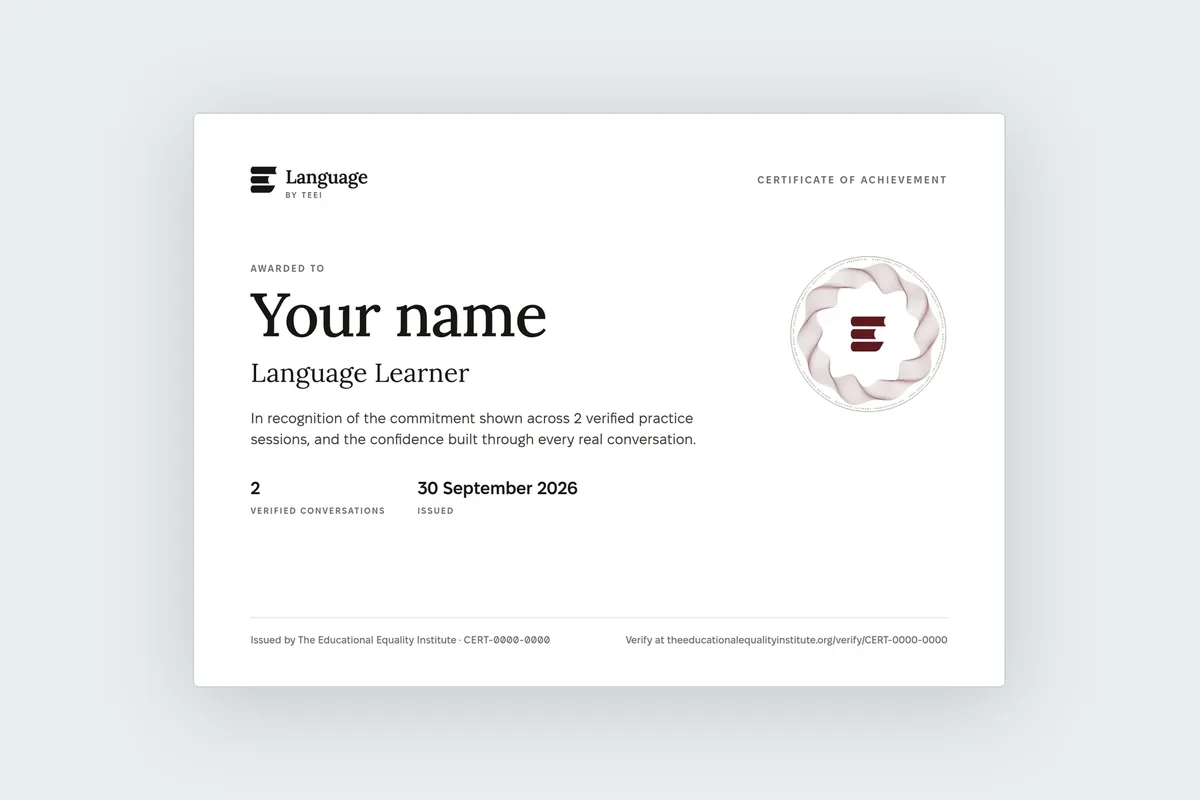
Maybe you are taking free online courses to rebuild or change a career. Then it helps to know exactly what the paper in your hand says, so you can decide what else to add.
Two kinds of paper
Not every certificate is the same kind of evidence.
- A completion certificate says you worked through a course: its lessons, exercises and any quizzes. It records effort and coverage.
- A certification usually means you passed a separate assessment, often timed, set by the course provider or another body. It records that you could answer certain questions or complete certain tasks under test conditions.
Both are honest records. They answer different questions, and employers read them differently. Check which one you are working towards before you start, and describe it accurately on your CV.
What a certificate does show
- The topics you covered. A reader can look up the course and see what it teaches.
- That you finished. Completing a long self-paced course, often in the evenings around everything else, is a real signal of persistence.
- When you did it. The date records completion. Check whether the course covered the tools and versions the role uses.
What it doesn’t show
- That you can use the skill on a real problem. Course exercises are clean and well defined. Work is messier: unclear questions, incomplete data, deadlines.
- Your judgement. Knowing a tool is different from knowing when to use it, and when not to.
- How you work with other people. Explaining your work, taking feedback and changing course are all part of the job, and none of them appear on a certificate.
- That the knowledge will stay current. Tools change. A certificate is a snapshot.
None of this makes a certificate worthless. It means a certificate is one piece of evidence, and the others are up to you.
How to fill the gap
Build one small project of your own. Take the skill from the course and use it on a question you actually care about. It does not need to be large. It needs to be yours, finished, and something you can show.
Be able to explain it in plain words. What was the question? What did you do? What did you find, and what would you do differently? That account shows an employer how you approached the work.
Ask a working professional for feedback. Someone who does the job can point out strengths, gaps and practical improvements in your project. Choose someone who knows the work you want to do.
Where Skills Academy fits
Skills Academy is TEEI’s free skills programme. Its self-paced track runs today through DataCamp Donates: a course library with projects and certifications, free to TEEI learners. Live Academy formats include workshops, clinics, expert Q&A, webinars and classes. For personal guidance, such as feedback on a project or interview practice, you can choose a working professional as a mentor in TEEI Mentorship.
You can use the library, the live formats or both, in whatever order suits your week.
You might also start with
Each of these stands on its own:
- Your first conversation on TEEI Language
- Practising a language between conversations
- Your first weeks with a Women Buddy Programme buddy
To see the courses and the live formats, read about Skills Academy.